
Saying Goodbye to a Small Pet: Aftercare Options for Rabbits, Guinea Pigs, Hamsters & More
January 22, 2026
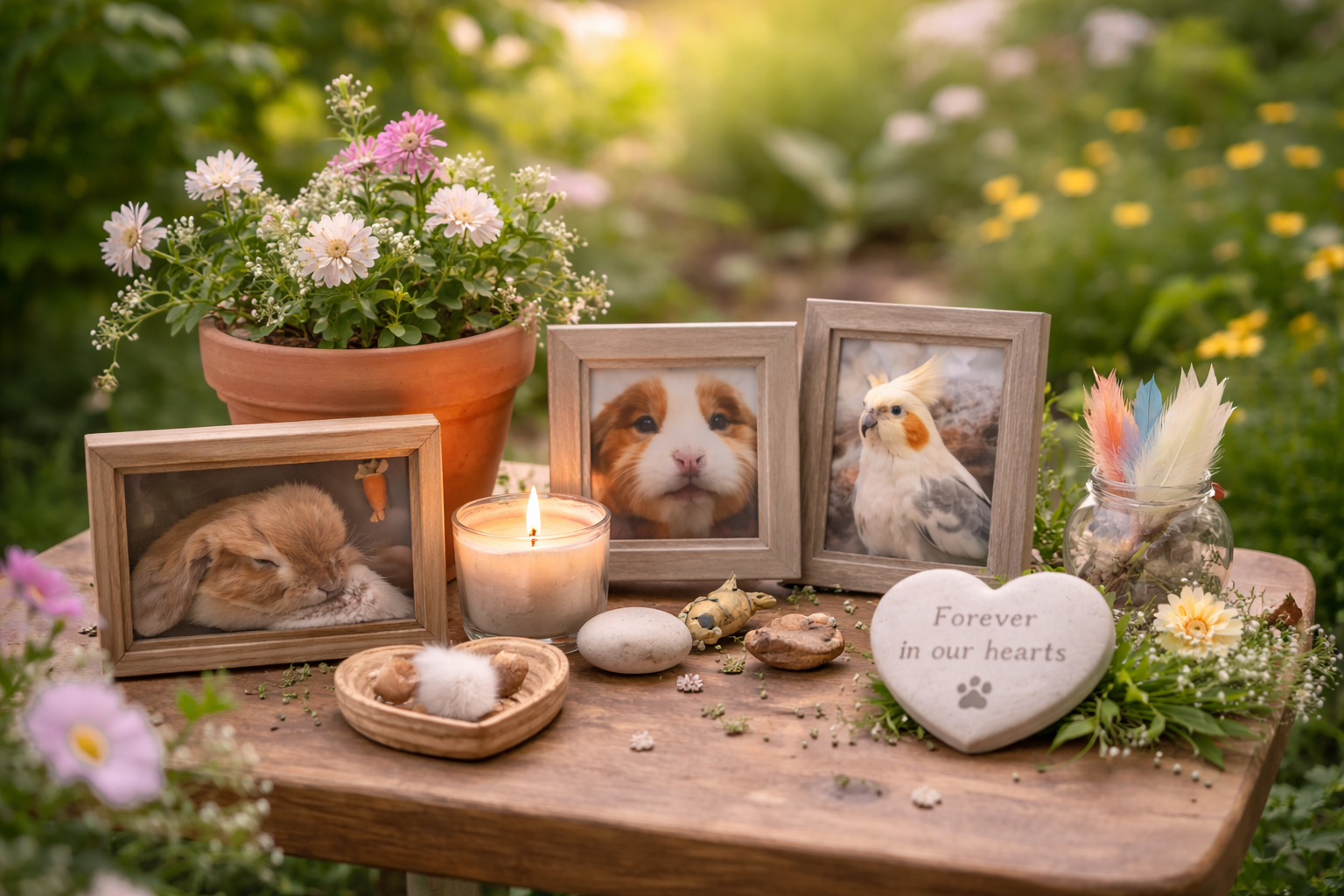
When people think of pet loss, they often picture a dog or cat—an animal that’s been part of the family for years, woven into daily routines and big life moments. But anyone who has loved a small pet knows something important:
Size has nothing to do with love.
Whether your companion was a rabbit who greeted you with happy hops, a guinea pig who squeaked the second you opened the fridge, a hamster who ran miles on their wheel at night, or a bird who chirped “hello” every morning—your bond was real. Their personality was real. Your grief is real.
And when that small pet passes away, you may find yourself feeling overwhelmed in a way you didn’t expect. There’s heartbreak, yes—but there’s also uncertainty. Many families don’t know what to do next because small pet aftercare isn’t talked about as often, and the options can feel unclear or even taboo.
This guide is here to help. We’ll walk through what to do after a small pet passes, what aftercare options may be available, and how to honor them in a way that feels meaningful. And if you’re looking for a gentle, compassionate partner to help you through the next steps, Resting Rainbow is here to support families through pet aftercare with dignity and care—because every pet deserves to be treated with love, no matter their size.
Small Pets Leave Big Footprints
If you’re grieving a small pet, you might be hearing things like:
- “At least it wasn’t your dog.”
- “You can always get another one.”
- “They don’t live very long anyway.”
- “It was just a hamster.”
Even when people mean well, those comments can feel like sandpaper on a wound.
Because the truth is: small pets often become part of our world in quiet, powerful ways.
They’re there during late-night homework sessions. They become comfort during stressful times. They make lonely rooms feel alive. They help children learn empathy. They bring routine and purpose. They make us laugh with tiny quirks we didn’t even know we’d love so much.
So if you’re feeling heartbroken—whether your small pet lived two years or twelve—your emotions make sense.
What to Do Right After Your Small Pet Passes
The first moments after any pet loss can be disorienting. But with small pets, there can be extra confusion because many people aren’t sure what “next steps” look like.
Here’s a gentle checklist of what to do right after your pet passes:
1) Take a Breath and Give Yourself a Moment
You don’t have to act instantly. If you can, sit with them for a moment. Speak to them. Say goodbye. Let the tears come if they come.
Grief doesn’t need to be productive. It just needs space.
2) Confirm They Have Passed (If You’re Unsure)
Small animals can sometimes appear very still due to illness, cold temperatures, or their natural tendencies to hide weakness. If you’re unsure:
- Check for breathing (tiny chest movement can be hard to see)
- Look for responsiveness to gentle touch
- Observe the eyes (often open or unfocused)
- If uncertain, call your veterinarian or an emergency clinic
It’s okay to ask for help confirming what’s happening.
3) Move Them to a Calm, Cool Place
If your pet passed in their enclosure, you may want to gently move them to a soft towel or small blanket. Keep the area cool if you need time to make aftercare arrangements.
4) Wrap Them Gently
A towel or soft cloth can make transport and handling easier. Many families find this helps emotionally, too—it feels more like caring for them one last time.
5) Decide What Comes Next
This is usually the hardest part, especially if you’ve never navigated small pet aftercare before. We’ll walk through all your options below, with compassion and clarity.
Common Small Pets and Their Unique Aftercare Considerations
Small pets come in many forms, and each has slightly different considerations when it comes to aftercare.
Here are some of the most common:
Rabbits
Rabbits are deeply social, intelligent animals. Losing a rabbit can feel like losing a best friend. If you have another rabbit bonded to them, you may notice behavioral changes (appetite shifts, depression-like behavior).
Guinea Pigs
Guinea pigs often bond strongly with their humans and cage mates. After a loss, surviving pigs may become quiet or anxious.
Hamsters
Hamsters are often solitary, but they have big personalities. Their loss can feel especially lonely because your bond may have been one-on-one and routine-based.
Rats
Rats are incredibly affectionate and social. Losing a rat can be devastating, and many people underestimate that grief.
Birds
Birds can form intense attachments and may grieve deeply. They can also be physically delicate, and their loss can happen suddenly.
Reptiles (Leopard geckos, bearded dragons, snakes, etc.)
Reptile grief can feel different because the relationship is often quieter—but still deeply meaningful. Owners often feel guilt or self-doubt after a loss, especially if the cause isn’t obvious.
Fish
Yes—fish count. Losing a fish can still be heartbreaking, especially after years of care and routine. It’s okay if you’re grieving.
Aftercare Options for Small Pets
Once your pet has passed, you’ll usually have a few main options. The right choice is personal. It depends on your comfort level, local regulations, and what feels like the best fit for your family.
Option 1: Veterinary Aftercare
Many veterinary offices offer aftercare services, even for small pets. If your pet was under veterinary care, your clinic may be able to:
- accept your pet’s remains
- coordinate cremation services
- offer private or communal cremation (depending on their provider)
- provide a paw print keepsake for some animals
If you aren’t sure what your vet offers, you can call and ask:
“Do you provide aftercare for small pets like rabbits/guinea pigs/hamsters?”
Even if they don’t, they may recommend local support.
Option 2: Pet Cremation (Private or Communal)
Pet cremation is a common option for dogs and cats, but many families don’t realize it may be available for small pets too.
Cremation can be a comforting choice because:
- it allows you to keep your pet close
- it gives you time to decide on a memorial
- it can feel more personal and intentional
- it avoids concerns about burial restrictions
Depending on your provider, there may be two main types:
Private Cremation
Your pet is cremated individually, and ashes are returned to you.
Families often choose this when they want:
- an urn
- a memorial shelf at home
- to scatter ashes in a meaningful place
- to keep a small portion in jewelry or a keepsake
Communal Cremation
Pets are cremated together, and ashes are not returned.
Some families choose this option for simplicity or cost considerations.
If cremation feels right for you, ask the provider:
- Do you offer cremation services for small pets?
- Do you return ashes (private cremation)?
- Are there memorial keepsakes available?
Option 3: Home Burial (When Allowed)
Some families choose to bury their small pet at home. This can feel deeply personal and comforting. However, it’s important to check your local laws and consider safety factors, including:
- property regulations
- depth requirements
- high water tables
- wildlife disturbance
- weather and soil conditions
If home burial is legal and safe where you live, you may want to:
- choose a quiet location
- bury them deep enough to prevent disturbance
- consider a biodegradable box or cloth wrap
- mark the spot with a plant, stone, or small memorial
For many people, home burial feels like bringing their pet back to the earth in a gentle, natural way.
Option 4: Pet Cemetery or Memorial Garden
Some areas offer pet cemeteries that accept a wider range of animals than people realize. This can be a meaningful option if you want:
- a dedicated resting place
- a marked memorial site
- a physical space to visit and grieve
Availability varies by location, and pricing can vary widely.
Option 5: Local Animal Services / Municipal Disposal (Least Personal)
In some situations, people consider disposal through municipal systems. While this may be an option depending on your area, many families find it emotionally difficult because it feels impersonal.
If this is the only available option for your situation, please know this:
Choosing what you can manage in the moment does not reduce your love.
You are not a bad pet parent for needing the simplest route when you’re overwhelmed.
“I Didn’t Know This Would Hurt This Much”
One of the most common thoughts after losing a small pet is surprise.
People say things like:
- “I didn’t expect to be this devastated.”
- “I feel silly crying this hard.”
- “I feel like I shouldn’t be this upset.”
But grief isn’t measured by the pet’s size or lifespan. Grief is measured by love, attachment, routine, and meaning.
Small pets often provide comfort in unique ways:
- they’re present during quiet parts of life
- they make you feel needed
- they create small joys every day
- they become “your little buddy”
So if you’re hurting deeply, it’s because your heart recognized them as family.
How to Support a Child After a Small Pet Passes
Small pets are often a child’s first experience with death. That makes this loss especially important—not because it’s “small,” but because it can shape how they understand grief.
Here are gentle ways to help children cope:
Use Clear Language
Avoid phrases like “went to sleep,” which can confuse kids and create anxiety about sleep.
Try:
- “Their body stopped working.”
- “They died, and that means we won’t see them again.”
Let Them Ask Questions
Kids may ask repeated questions. That’s normal. Answer simply and honestly, without overwhelming detail.
Give Them a Role (If They Want It)
Let them:
- pick flowers
- choose a photo
- help place a toy near the memorial
- draw a picture
- say goodbye in their own way
Validate Their Grief
Even if it’s “just” a hamster, their grief is real.
Say:
- “It makes sense you’re sad.”
- “They were important to you.”
- “We loved them, and it hurts to say goodbye.”
This helps kids feel safe expressing emotions.
If You Have Another Pet at Home: What to Expect
Many pet parents wonder if other animals grieve. The answer is: often, yes.
Signs your surviving pet may be grieving include:
- decreased appetite
- sleeping more
- searching behaviors
- increased clinginess
- restlessness
- vocalizing
- changes in normal routine
For small animals like rabbits or guinea pigs, grief can be significant—especially if they lived with a bonded companion.
Helpful steps:
- keep routines consistent
- offer comfort without forcing interaction
- monitor eating and drinking closely
- contact a vet if behavior shifts dramatically or continues
Grief can affect animals, too, and they may need time to adjust.
Memorial Ideas for Small Pets (That Feel Meaningful)
Memorials don’t have to be elaborate to matter. Sometimes small gestures carry the most comfort.
Here are some ideas:
Create a Memory Box
Include:
- photos
- a favorite chew toy
- a small piece of bedding
- a handwritten note
- their name tag (if they had one)
Frame a Photo
Even if you only have a few photos, choose one that captures their spirit. Consider printing it instead of leaving it in your phone.
Write Them a Letter
Tell them:
- what you loved about them
- what you’ll miss
- what you’re grateful for
- what you hope they knew
This can be surprisingly healing.
Plant Something in Their Honor
A small flower pot, indoor plant, or garden flower can become a living tribute.
Make a Tiny Ritual
Light a candle on the day they passed. Say their name out loud. Take a deep breath and remember one moment you loved.
Save a “Sound Memory” (If You Have One)
If you have a video of your bird chirping or your guinea pig squeaking, save it in a special folder. Those sounds become precious.
Navigating Guilt After a Small Pet Passes
Guilt is incredibly common after small pet loss. Often, it shows up as:
- “Did I miss signs?”
- “Should I have gone to the vet sooner?”
- “Did I feed them the right diet?”
- “Was their enclosure warm enough?”
- “Did they know I loved them?”
Small pets are experts at hiding illness. Many decline quickly. That doesn’t mean you failed. It means nature can be fragile and unfair.
If guilt is sitting heavy on your chest, try this reframe:
You didn’t have perfect control, but you did have real love.
And love matters most.
What If Your Small Pet Passed Suddenly?
Sudden loss can come with shock and panic. If your small pet passed unexpectedly:
- Don’t blame yourself right away
- If you need answers, contact your vet about a possible exam
- Remember: small animals can deteriorate quickly
- Focus on what you can do now: gentle aftercare and support
It’s okay if you feel confused, angry, or numb. Those are grief responses too.
Questions to Ask if You’re Choosing Cremation or Professional Aftercare
If you reach out to a cremation provider or aftercare team, these questions can help you feel more confident:
- Do you provide aftercare for rabbits/guinea pigs/hamsters/birds/reptiles?
- What are the options (private vs communal)?
- Will ashes be returned?
- How long does the process usually take?
- Are keepsakes available?
- What do I need to do for transport or pickup?
- Can I have a moment or viewing time? (If applicable)
Even if you feel emotional asking these questions, you deserve clear answers. This is your pet. This is your loss.
A Gentle Reminder: Your Grief Counts
Small pet grief can be uniquely lonely because people underestimate it. You might feel like you have to grieve quietly so others don’t judge you.
But your loss is valid. Your sadness is normal. And your pet’s life mattered.
Your rabbit mattered.
Your guinea pig mattered.
Your hamster mattered.
Your bird mattered.
Your reptile mattered.
Your fish mattered.
They were part of your world. That’s the only requirement.
When You’re Ready, Resting Rainbow Can Help
Saying goodbye is never easy—especially when you feel unsure of what steps to take, or when it seems like the world doesn’t understand how much your “small” pet meant to you.
If you’re navigating pet aftercare and want compassionate guidance, Resting Rainbow is here to support you with respect, dignity, and the kind of care that recognizes what you already know deep down:
Love is love, no matter the size.
However you choose to honor your pet—through cremation, burial, a memorial ritual, or simply holding their memory close—your goodbye deserves gentleness. Your grief deserves space. And your pet deserves to be remembered with the tenderness they gave you every day.